The Fence Guys Local service website
Every page leads toa better estimate request.Every pageleads to abetter estimaterequest.
Collins Creative designed and built the website for The Fence Guys in Bakersfield: service pages organized around what is wrong with the fence, and a five-step estimate flow that gathers the project details before anyone picks up the phone.

The website, interactive
Start an estimate.
Step through to review.
Browse the service pages, then open the project estimate on desktop or on a phone and step through all five parts to the review screen. This is a copy of the live site.
Sending, verification, calls, texts and email are switched off in this copy, along with analytics, so nothing ever reaches the business.
The estimate flow we built
Five short steps
instead of one long form.
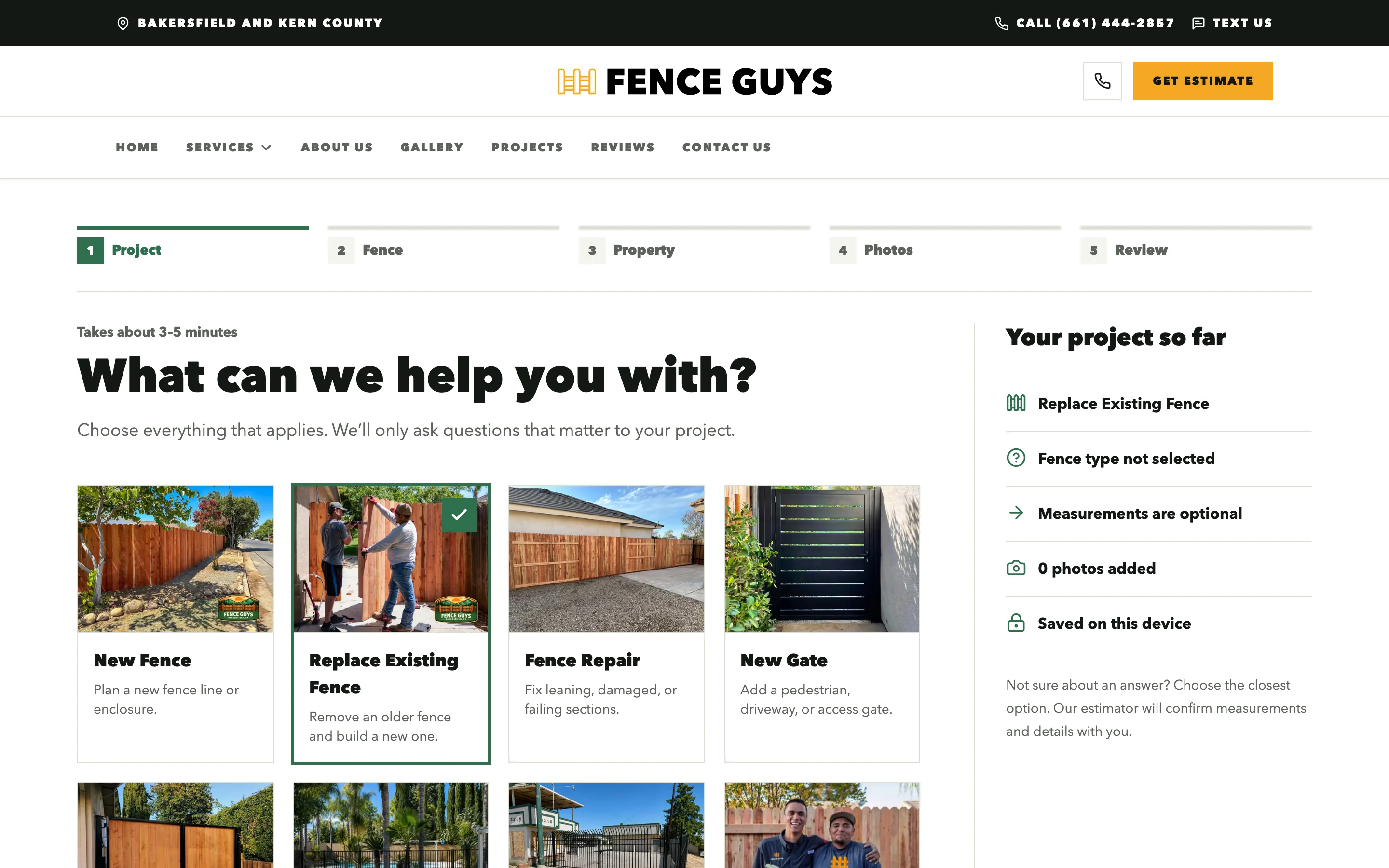
A fence estimate depends on the job: new or replacement, the material, the length and height, the ground, and what is in the way. We broke the request into five steps that ask one kind of question at a time, with picture cards where a homeowner might not know the word for it.
Captured from a local copy of the finished site, October 21, 2026
- ProjectNew fence, replacement, repair, gate, pool, or not sure
- FenceMaterial, rough length, height, and gates
- PropertyGround, access, obstacles, neighbors, and HOA rules
- PhotosPictures of the fence line, if they have them
- ReviewEverything checked before it is sent
What is switched off The interactive copy above is frozen from the finished build. Its estimate flow works through the review step, then shows that sending is switched off. Nothing reaches fenceguysbakersfield.com.
The challenge
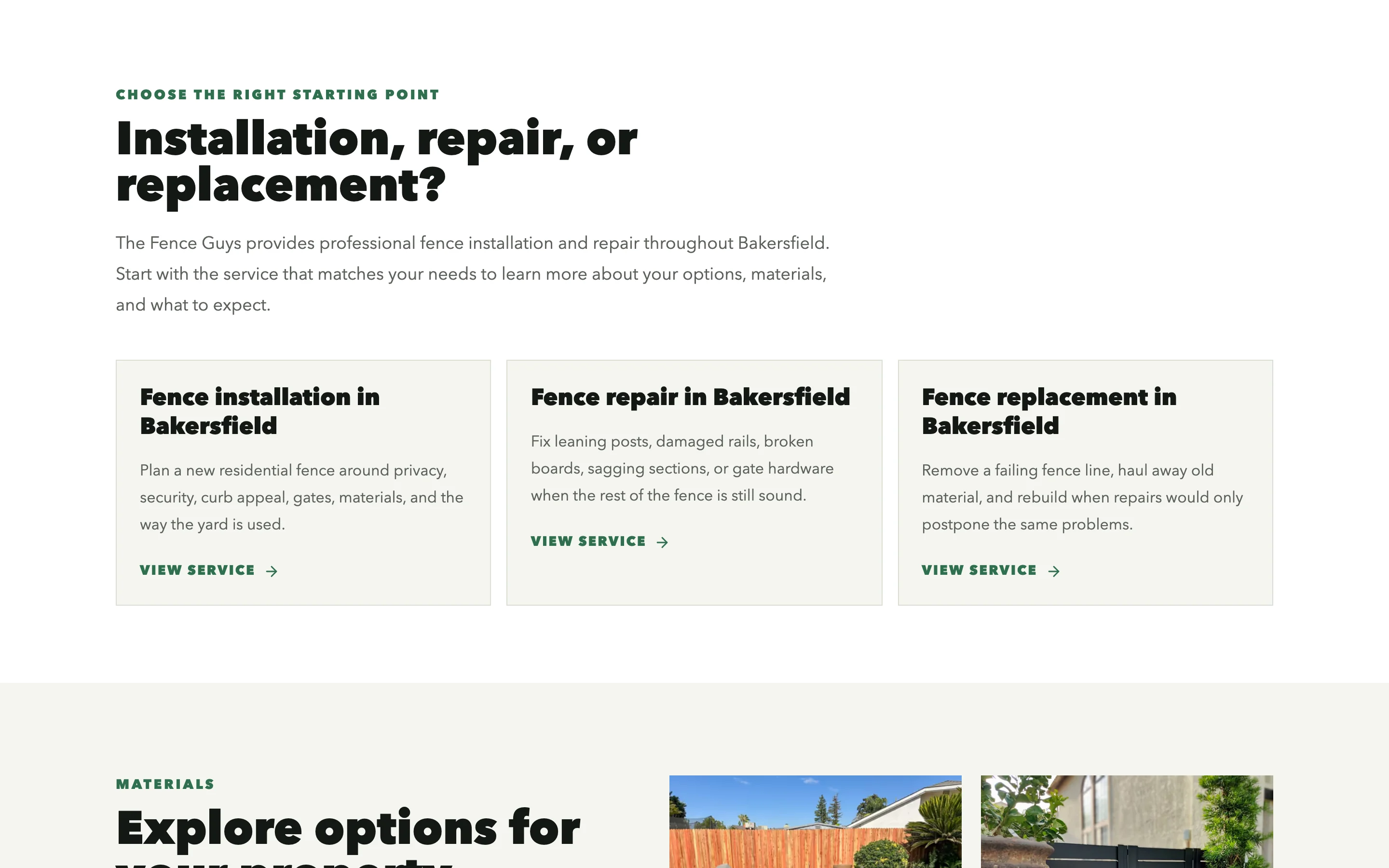
Homeowners start with a problem, not a service name.
People looking for a fence company usually know what is wrong: a section is leaning, the old fence is done, or the yard needs one for the first time. A long list of services makes them translate that into trade terms first.
So the homepage asks the question for them and points each answer to its own page, with the estimate one tap away from every one.
The page system
One template.
A page for every service.
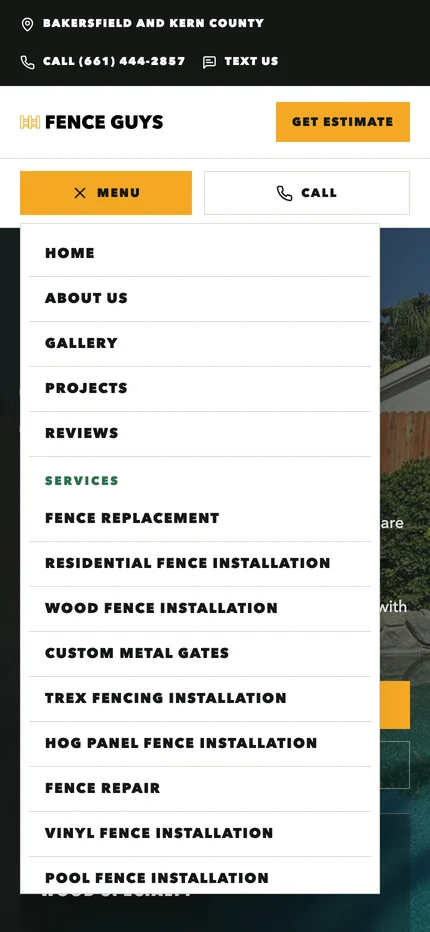
Each fence type and service runs on the same page structure: a breadcrumb, a plain headline, build choices, a short sequence of the work, questions, and links to related services and Bakersfield areas. Start your project and the phone number sit in the first screen of every page.
Same structure, every service.

Menu and call, side by side.

The estimate on a phone
Easy to answer
from the yard.
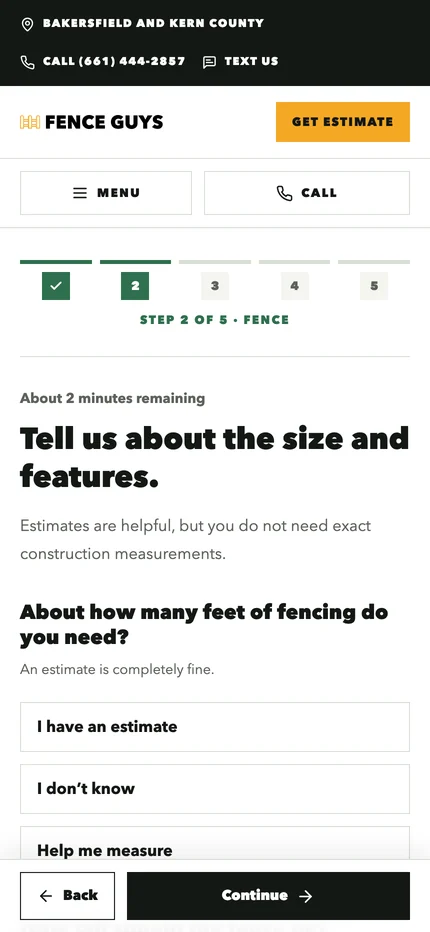
Most people will fill this out standing next to the fence. On a phone the steps collapse to numbered markers, answers become full-width buttons, and Back and Continue stay pinned to the bottom of the screen.
Answers are saved on the device as a draft, so a homeowner can stop to measure and come back.
Project documentation
Projects that explain
the service.
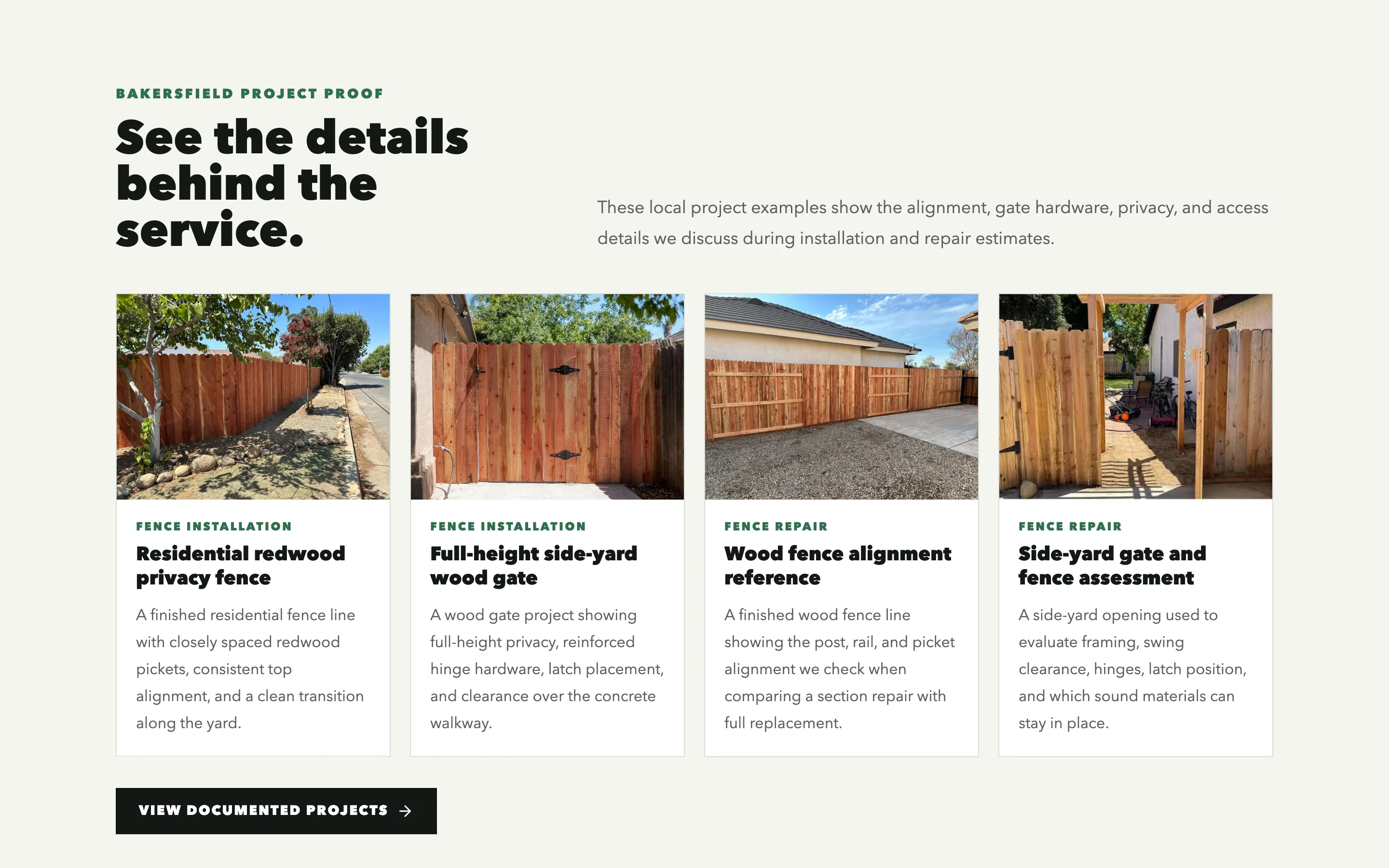
We set up project cards that label each job by service and say what the homeowner should look at: alignment, hinge hardware, or a section used to judge repair against replacement. They link to full project pages instead of sitting in a loose photo grid.
What we made
A website organized
around the estimate.
Homepage and navigation
A homepage that sorts visitors by installation, repair, or replacement, with call, text, and estimate actions in the header on every screen size.
Service page template
One structure for each fence type and service, with build choices, the order of the work, questions, and related pages.
Project estimate flow
Five steps with picture cards, a running summary, a saved draft, an optional photo step, and a review before sending.
Projects and service areas
Documented project pages, a gallery, and Bakersfield area pages that link back to the services.
Ask what the estimate needs.
Nothing more.

Project lead
Brendan Collins
Brendan led the UX/UI design and front-end build of the site, from the homepage and service template to the estimate flow.
The judgment that mattered was the order of the questions: start with the problem the homeowner can describe, and leave measurements optional so nobody quits the form to find a tape measure.
Meet the studioYour next chapter
Are your estimate requests missing the details?
If every new lead starts with a phone call to ask the same questions, we can build the questions into the website.
Start a project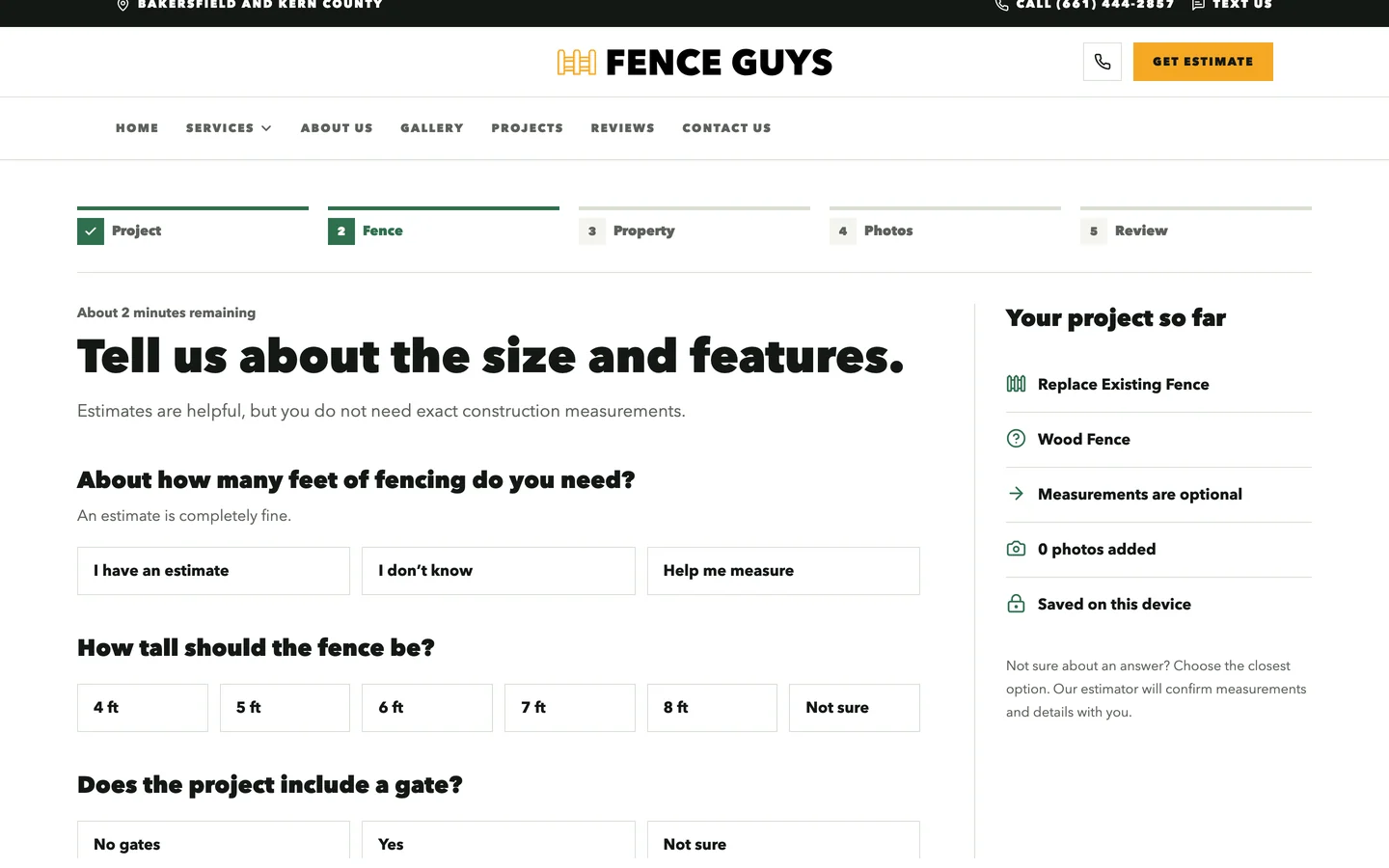
More Collins Creative work