Dimension and option rules
Capture the measurements and choices that change the result. Make incompatible combinations and missing information visible before a quote reaches the next person.
Services / Quoting software + configurators
We design and build custom quoting software and product configurators. Your measurements, options and pricing rules become a guided tool, with the preview, material quantities and staff handoff scoped around how you sell and build. Based in Bakersfield, serving businesses across Kern County and beyond.
Start with the calculation
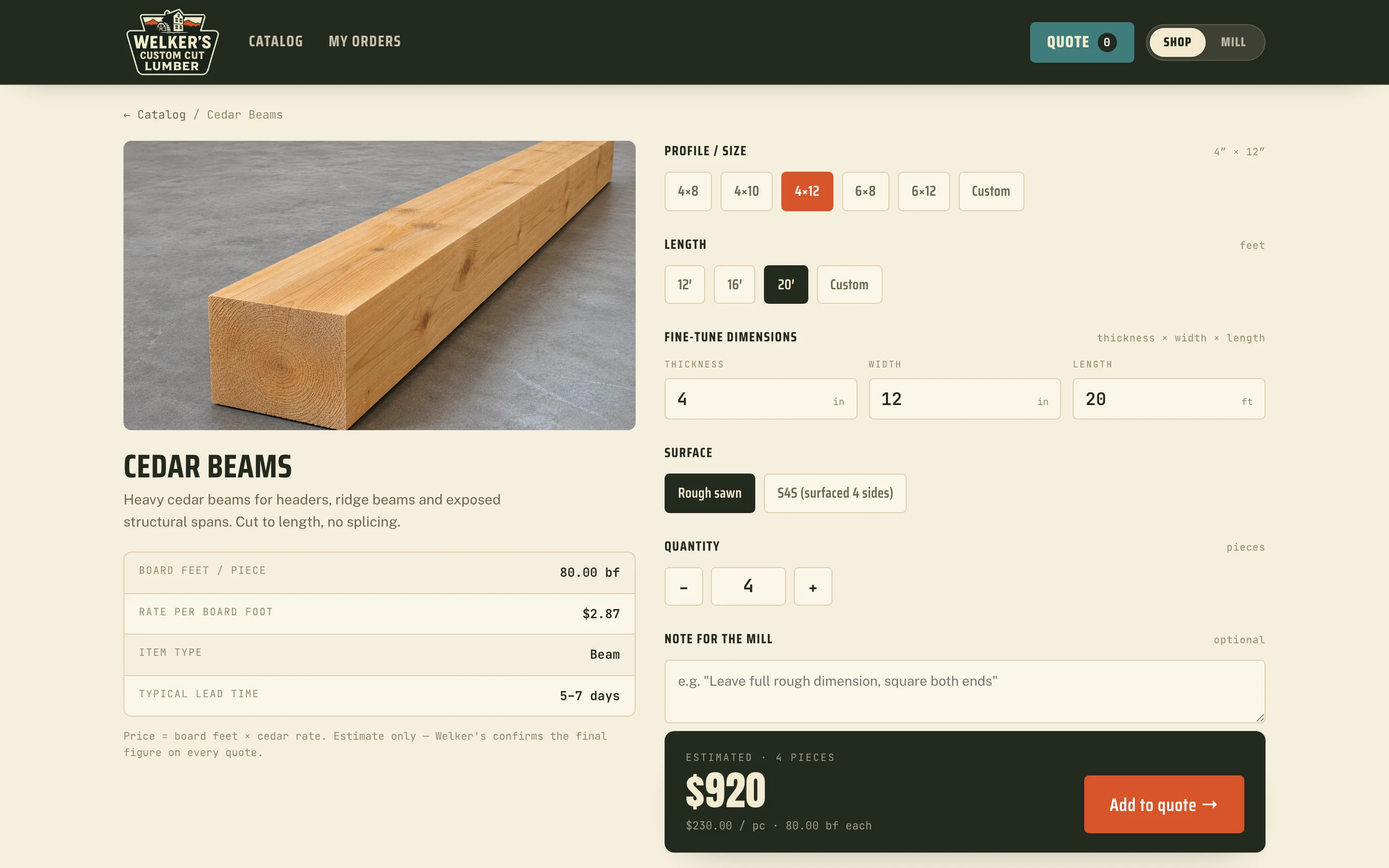
An opening changes the gate frame and picket count. A fence run changes panels, posts and the final cut. A cedar beam’s three dimensions determine its board feet. The software needs to carry those relationships through every view and output.
One set of product rules. A customer who understands the options. A team that receives the specification.
Built by Collins Creative
Explore the drawing, pricing and handoff decisions in these projects. Prototypes and isolated previews are labeled below and in each case study.
The scope follows the product
Capture the measurements and choices that change the result. Make incompatible combinations and missing information visible before a quote reaches the next person.
Model the unit, rate, quantity, waste allowance and adjustments behind the price. Identify which figures are estimates and which need staff confirmation.
Use one project model for the customer drawing and the quantities behind it. A change to the size should carry through to the parts and cuts.
Scope the quote record, approval, export or order view around the team receiving it. Keep dimensions, options and notes together so the next step has the full specification.
Review routine and unusual jobs, rate sheets, measurement units, stock sizes and staff decisions.
Define inputs, formulas, rounding, invalid combinations and the outputs each role needs.
Put a working slice in front of the team and compare its results with known jobs and edge cases.
Agree approvals, exports, integrations, rate maintenance and support before the system goes into use.
A useful first conversation starts with a real quote and the work behind it. Email us or call (661) 444-2857.
When size, materials, options or production rules change each quote, and your team repeatedly calculates the same relationships by hand. If standard estimating software already fits the job, custom development may be unnecessary. We start by reviewing representative quotes and the exceptions.
Yes, where the choices can be made understandable and the rules can be expressed reliably. A customer-facing tool can show a preview and an estimate, then route the specification to staff for review. Site measurements, unusual requests or final pricing can remain approval steps.
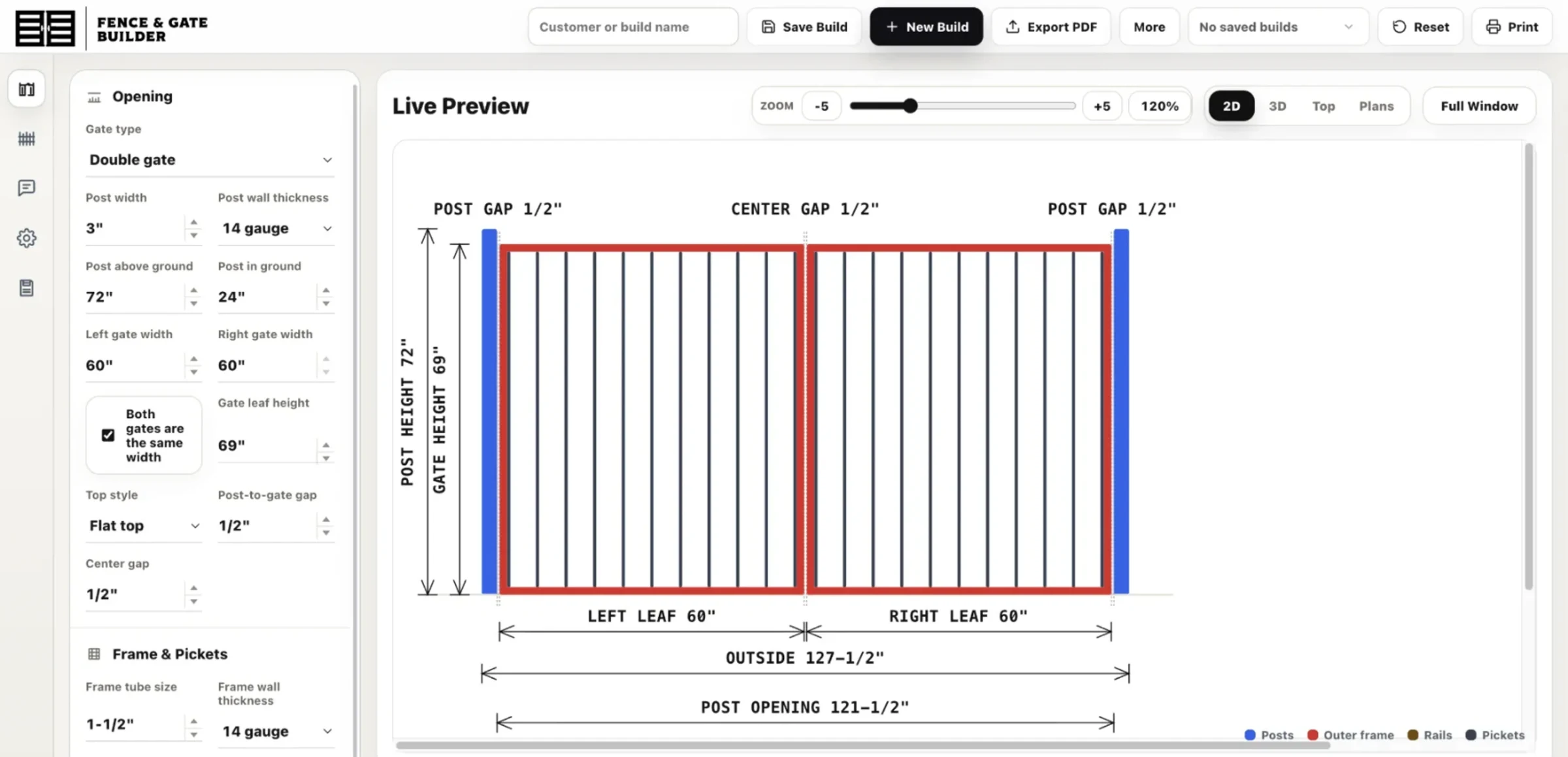
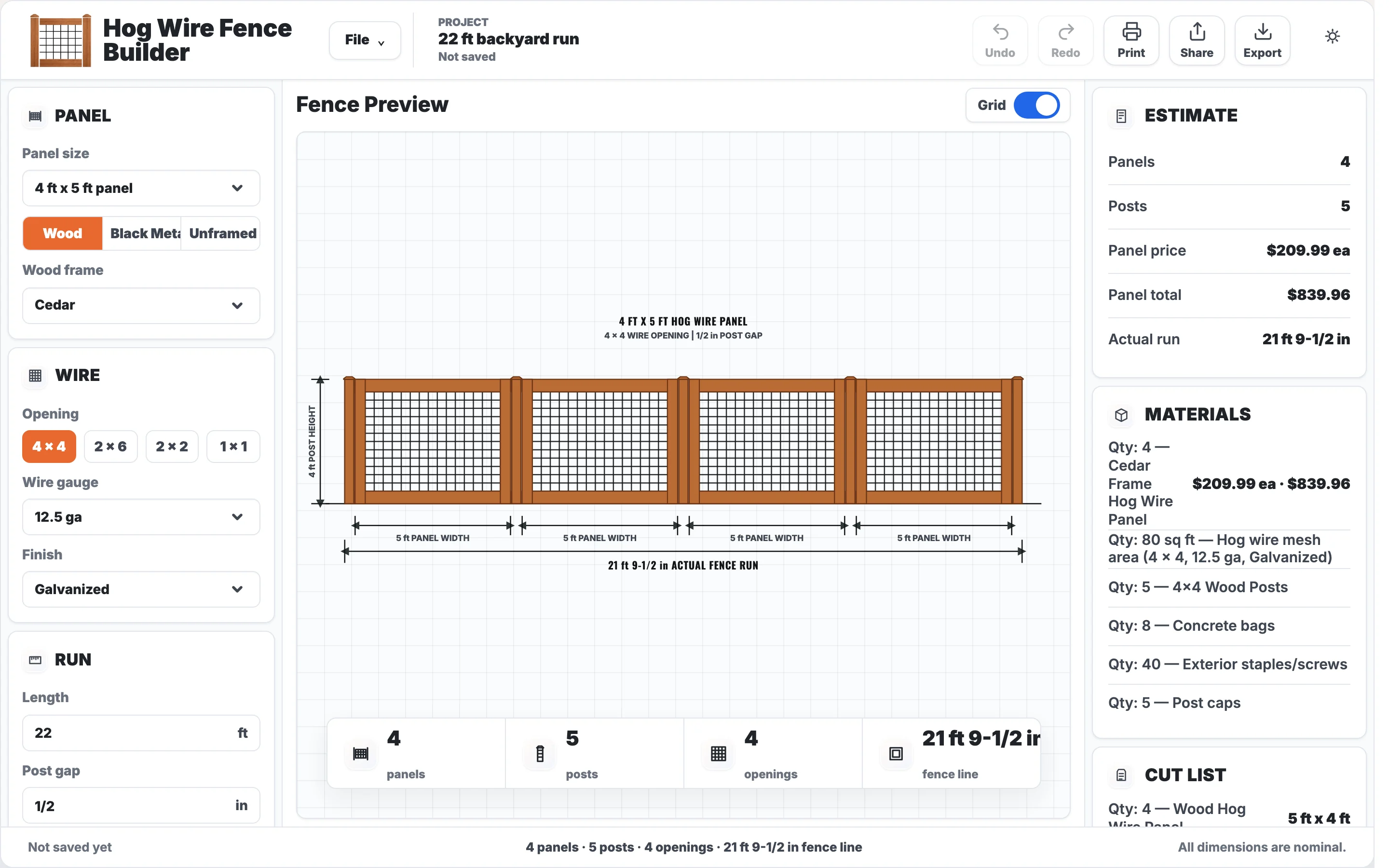
When the construction rules are defined, the same dimensions can drive a drawing, quantities and cuts. Fence & Gate Builder and Hog Panel Builder show this approach. A production build still needs validation against your actual materials, stock lengths and fabrication practices.
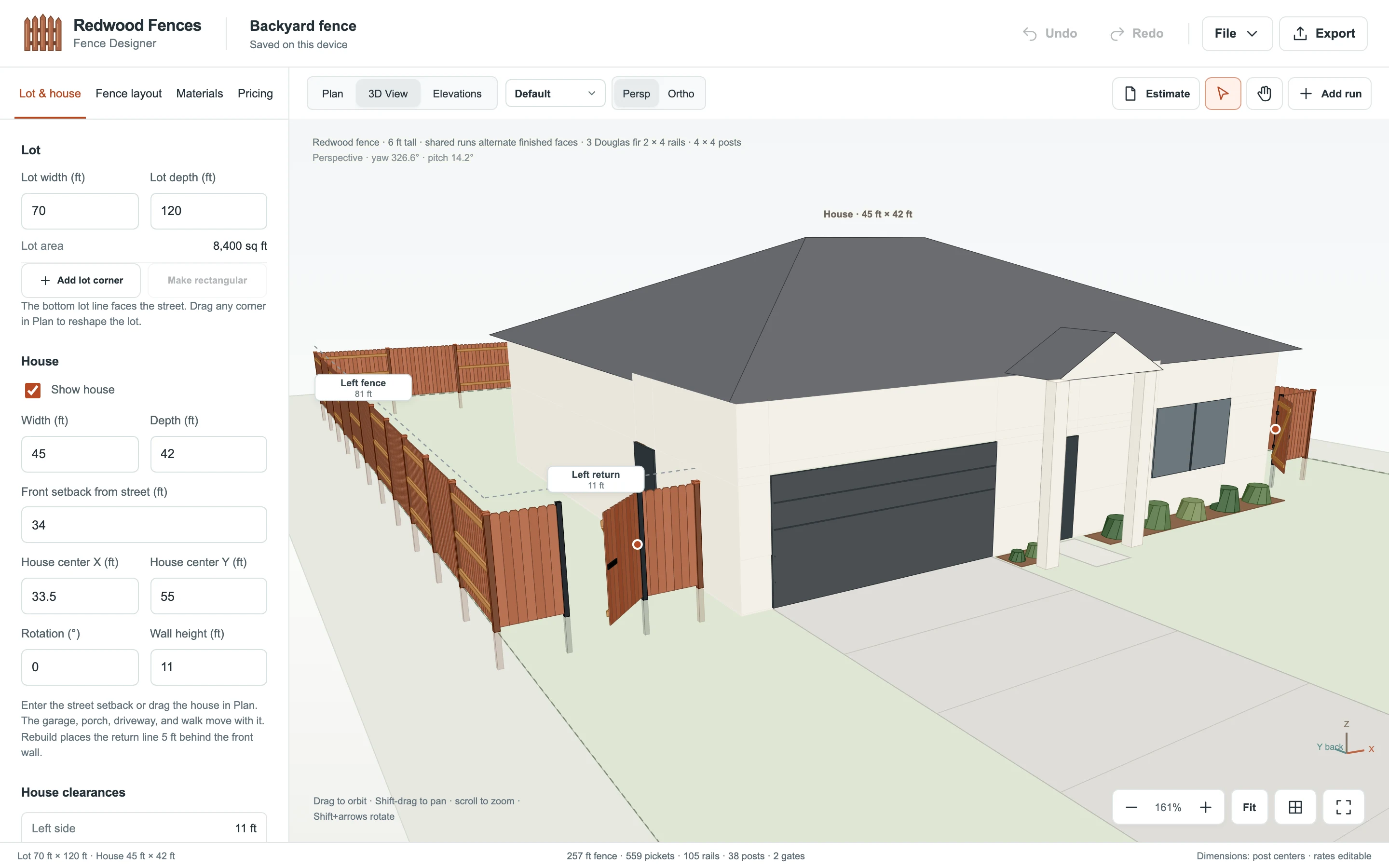
No. Hog Panel Builder and Welker’s are working prototypes. The Redwood case preview is an isolated designer using sample rates. Fence & Gate Builder’s embedded copy saves locally. Each linked case explains its limits; preview interactions do not demonstrate live order delivery or cloud storage.
We identify who maintains rates, how changes are reviewed, and whether quotes need a record of the price used at the time. Connections to accounting, inventory or order systems depend on their available APIs and permissions. Those connections and any migration belong in the project scope.
A few representative quotes, the measurements and options behind them, your pricing method, and the outputs staff need. Include an unusual job as well as a routine one. We use those examples to define the calculation, review steps, timeline and investment before building.
A configurator may be one part of a larger system. Explore custom business software, e-commerce development and AI workflow automation. We scope the connections your team needs.
Show us the inputs, pricing rules and final output. We’ll work out which part is worth building first.