Products, variants, specifications, and fit
Categories, search, filters, product relationships, dimensions, compatibility, substitutes, media, documents, and the data model behind them.
ServicesE-commerce
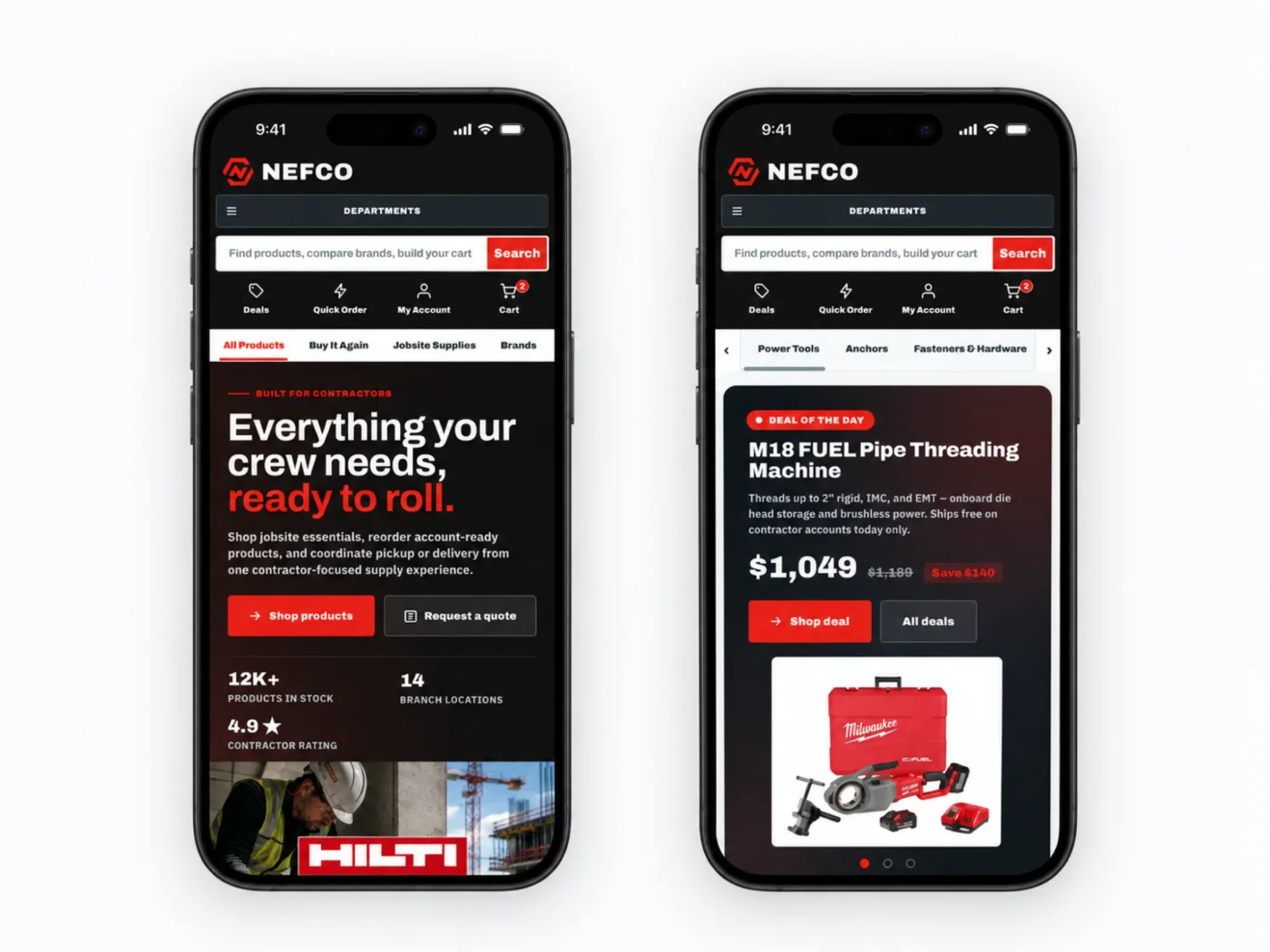
Custom commerce for complex catalogs, dimensions, product options, live pricing, contractor accounts, repeat ordering, pickup, delivery, and the staff workflow behind every order.
Where we start
Custom commerce earns its keep when a standard product grid and checkout cannot represent the real catalog, customer, price, or fulfillment decision.
Catalog structure, filters, specifications, compatibility, saved lists, and quick order help customers reach the right item.
Dimensions, variants, customer accounts, quantities, branches, quotes, and approvals shape the buying path.
Pickup, delivery, tax, payment, order status, staff queues, inventory, and repeat ordering stay part of the same system.
Featured · Gateworks
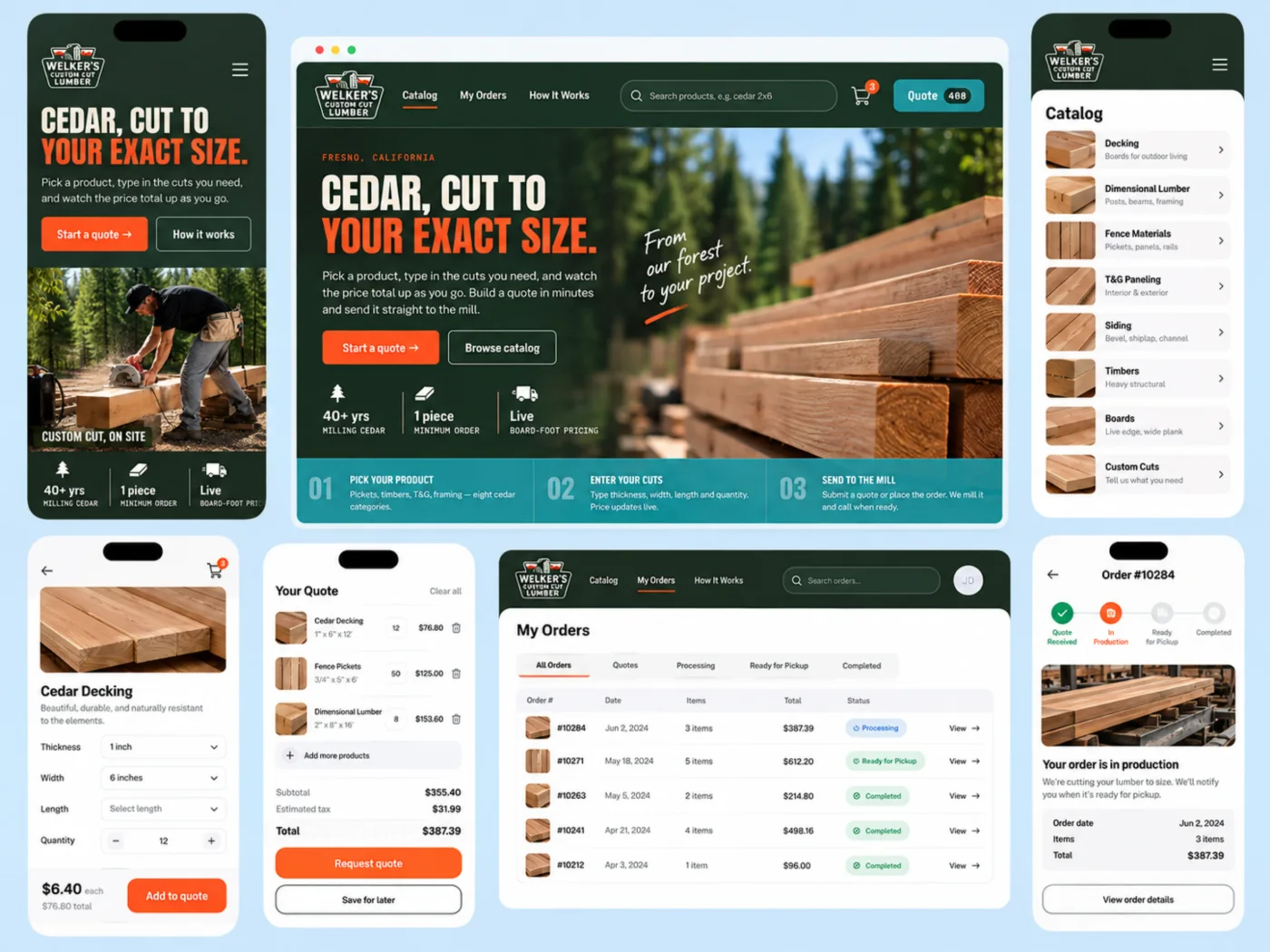
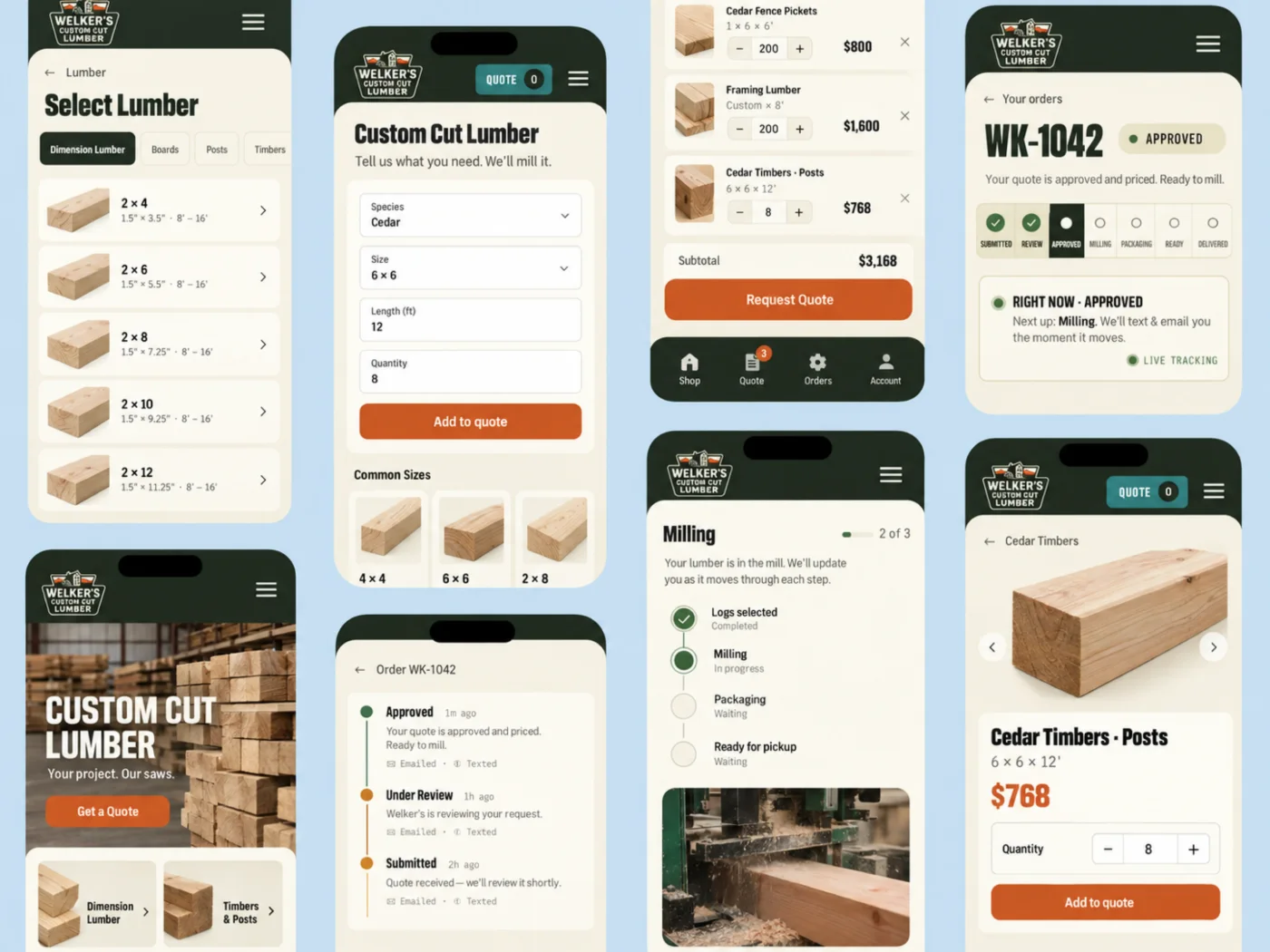
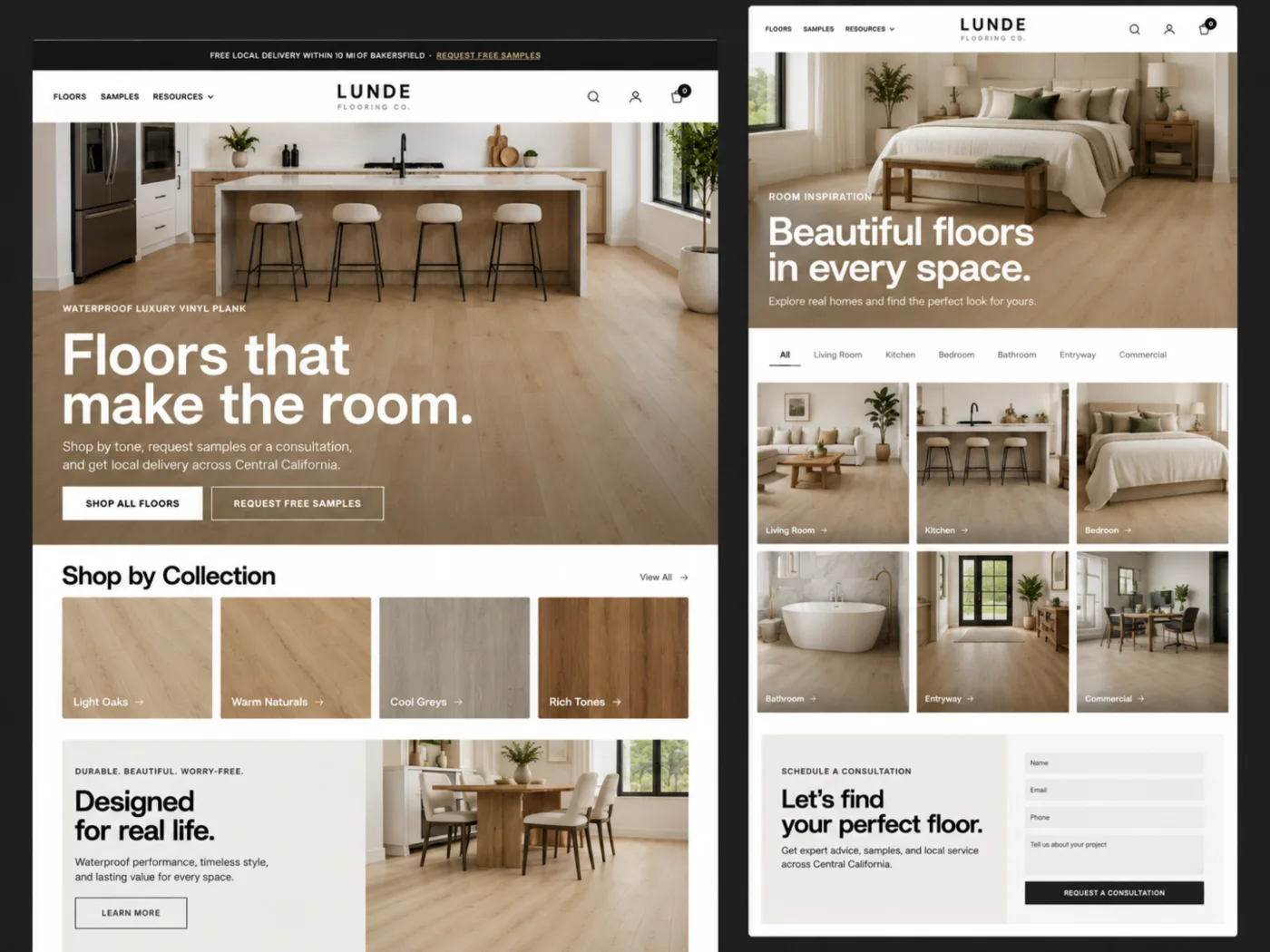
Industrial parts, construction supply, custom-milled lumber, and flooring. Each project starts with a different product model and a different buying decision.
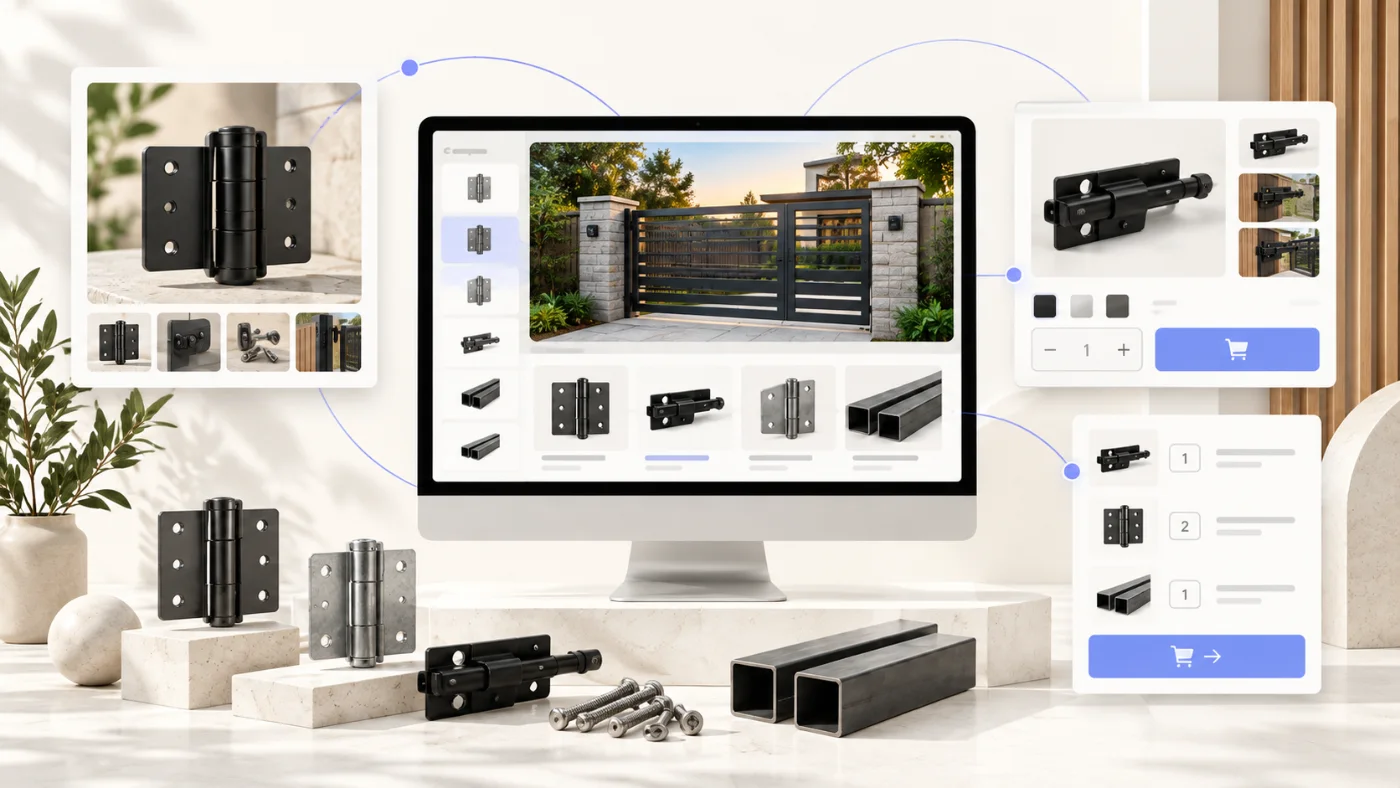
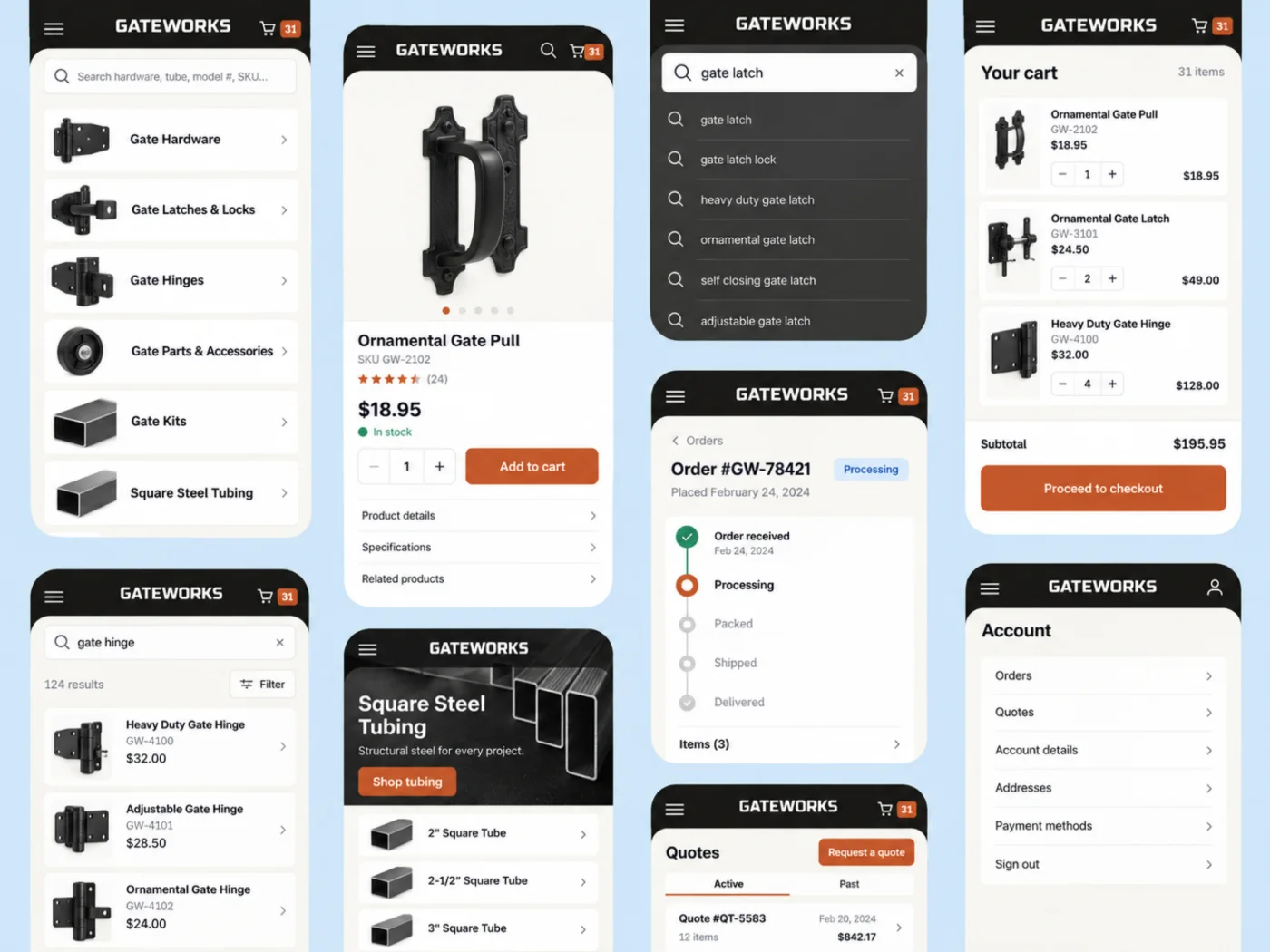
Gateworks connects a 915-item storefront, product discovery, checkout, pickup or delivery, customer accounts, fulfillment, and staff operations.
See Gateworks →What it can handle
Buyer roles, pricing rules, fulfillment choices, and staff process decide what gets built. We do not add features until they have a clear owner and job.
Categories, search, filters, product relationships, dimensions, compatibility, substitutes, media, documents, and the data model behind them.
Retail and contractor accounts, customer terms, volume rules, branch context, quote requests, purchase orders, and approval steps.
Cart behavior, payment flows, freight or local delivery, pickup windows, taxes, confirmations, receipts, and clear recovery when something fails.
Staff queues, status, stock, documents, customer communication, reorder paths, reporting, and connections to the systems the team already uses.
How we work
Some stores fit a standard commerce platform. Others need a custom front end, custom product logic, or a connected operations system. The decision starts with the business rules.
Products, variants, dimensions, pricing rules, customer types, and where the data lives today.
Search, configuration, quoting, accounts, and checkout shaped around the real purchase decision.
Orders reach staff queues, inventory, accounting, and fulfillment without anyone retyping them.
Migrate the catalog, watch real orders, and expand the store where customers and staff need it.
After the click
The storefront is only the visible end of the system. We map what staff, inventory, accounting, fulfillment, and customer service need after an order arrives.
Product data
Names, SKUs, variants, dimensions, prices, availability, media, and documents follow a defined source of truth.
Business rules
Pricing, compatibility, freight, taxes, discounts, approvals, and exceptions are mapped with the people who use them.
Recovery
Empty states, validation, declined payments, unavailable products, expired quotes, and interrupted orders are handled.
Operations
Orders land in a useful queue with the customer, items, terms, fulfillment choice, documents, and status attached.
Repeat buying
Accounts, saved lists, past orders, quick order, quote history, and reordering cut repeated work.
Integrations
Inventory, accounting, email, shipping, tax, and payment integrations get validation, logging, retries, and manual recovery.
Scope and investment
We recommend the scope, timeline, and investment after we understand the catalog, customers, product rules, content, integrations, fulfillment workflow, and support needs. Larger systems can be phased so the highest-value buying and operational flows are built first.
Platform, product, migration, and integration questions that usually shape the first phase. Something else? Email us or call (661) 444-2857.
Yes. Contractor and trade accounts, customer-specific pricing, quote requests, purchase orders, approval steps, and branch or pickup logistics are the kinds of rules we build around.
Yes. Dimensions, options, and material rules can drive live pricing, previews, and a quote cart, with the same rules feeding production output like cut lists or takeoffs.
Yes. We connect to QuickBooks, inventory systems, shipping, tax, and payment providers, with logging and manual recovery so a failed sync never loses an order.
Both, depending on the workflow. If a standard platform represents your catalog, customers, and pricing cleanly, we use it. When the rules do not fit a template, we build a custom front end or a connected operations system.
Yes. We map products, variants, images, documents, and customer accounts to a defined source of truth, clean the data where needed, and validate it before launch.
Yes. Accounts can include order history, saved lists, quick reorder, quote history, invoices, and documents, so repeat buying gets easier.
Bring the catalog, customer types, pricing logic, fulfillment choices, and staff workflow. We will help you define the right commerce system.